
9 December 2025
Latvia Strengthens Drone Wall on Its Eastern Border with Increased Investment in Air Defence and UAV Capabilities
Latvia is significantly strengthening its air defence and unmanned aerial system (UAS) capabilities, marking a major step forward in enhancing both national and European security.
According to Minister of Defence Andris Sprūds, Latvia plans to allocate €200.54 million to strengthen air defence in 2026. An additional €50 million will be invested in unmanned aerial capabilities — a substantial increase compared to €20 million allocated in 2025. The announcement was made during the Ministry of Defence’s monthly press conference on 9 December.
“These investments demonstrate Latvia’s commitment to significantly increasing national resilience and response capacity, while contributing to broader European security,” said Minister Sprūds.
Latvia has become the first NATO member state to implement acoustic drone detection across its entire eastern border, significantly improving the ability to detect low-flying objects at an early stage. At the same time, new surveillance systems are being integrated, including recently delivered “Giraffe” 1X radars, which enhance detection capabilities and enable rapid response to potential threats.
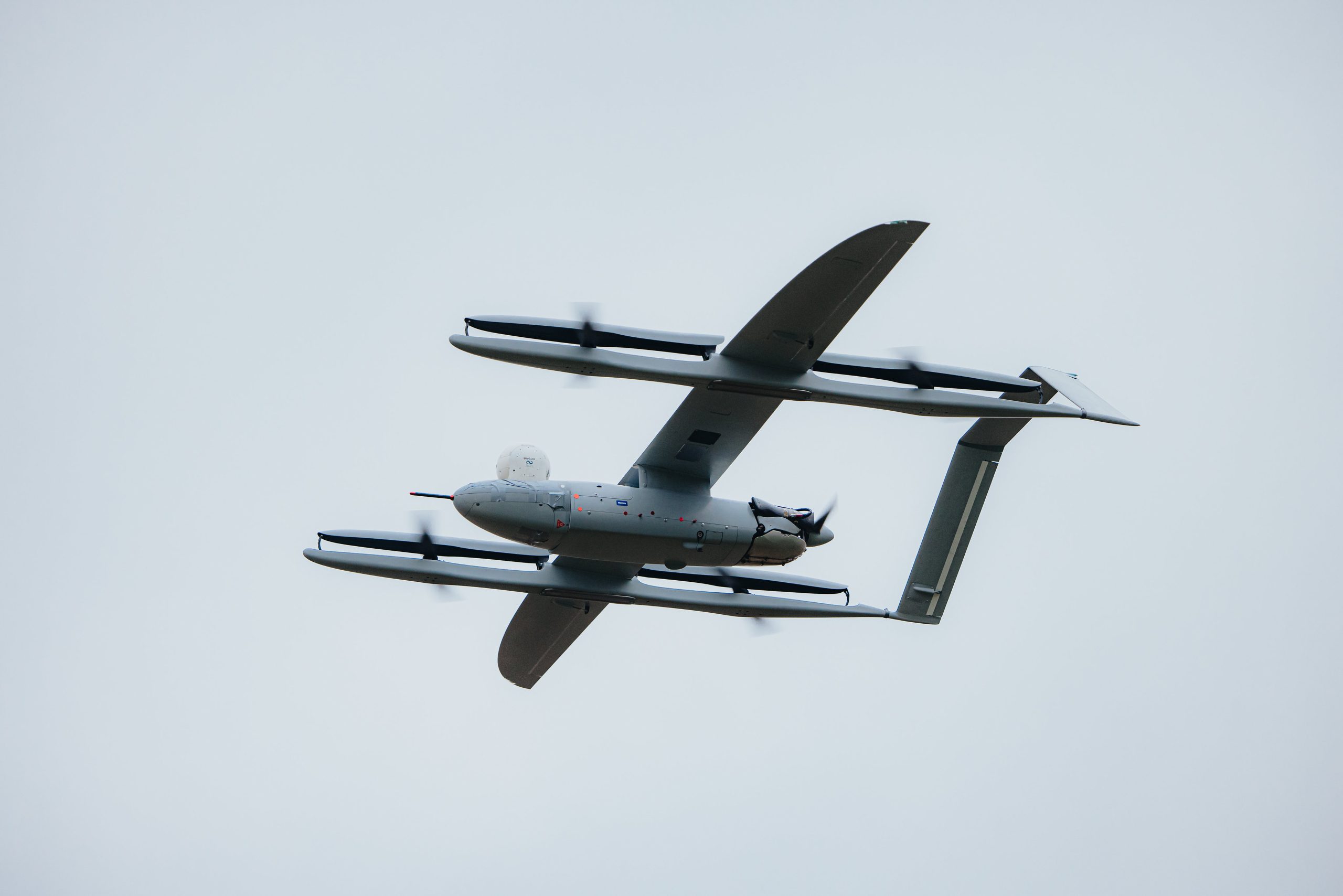
Together, these measures form a key part of Latvia’s so-called “drone wall” – a comprehensive approach that combines detection and counter-drone solutions to strengthen national airspace protection.
Advancing Counter-Drone Capabilities with Local Industry
Latvia is also actively developing counter-drone systems in close cooperation with its domestic defence industry. Earlier this year, several research and development projects were launched focusing on:
- Electronic warfare technologies
- Military mobile platforms
- Interceptor drones
- Guided missile systems
Initial interceptor drone tests have already taken place at the Selonia military training range, with the first domestically produced interceptor drones expected to be delivered to the National Armed Forces by the end of the year and deployed along the border.
In parallel, Latvia plans to procure combat-tested drones from Ukraine to evaluate their effectiveness and ensure access to the most advanced and operationally proven technologies. Work has also begun on assessing next-generation interceptor drones, taking into account the rapid pace of technological development.
Latvia Strengthens Its Leadership Role at EU Level
“We are systematically strengthening Latvia’s air defence by developing both detection and countermeasure capabilities, investing in modern technologies, and cooperating with local industry. Our external border is also the border of the European Union and NATO — its security is a shared responsibility,” emphasized Minister Sprūds.
At the EU level, Latvia is actively advocating for increased funding for air defence and drone capabilities, highlighting them as a key priority for Europe in the coming years.
In early December, Latvia, the Netherlands, and Croatia agreed to enhance cooperation in the development of drone and counter-drone systems during the EU Foreign Affairs Council (Defence Ministers) meeting in Brussels. This partnership underscores Latvia’s growing leadership role and strengthens its position as a contributor to Europe’s collective security architecture.
Source: Ministry of Defence of the Republic of Latvia
Department of Military Public Relations, Press Division